Jacques Jonassaint
Konstitisyon se papie, bayonèt se fè
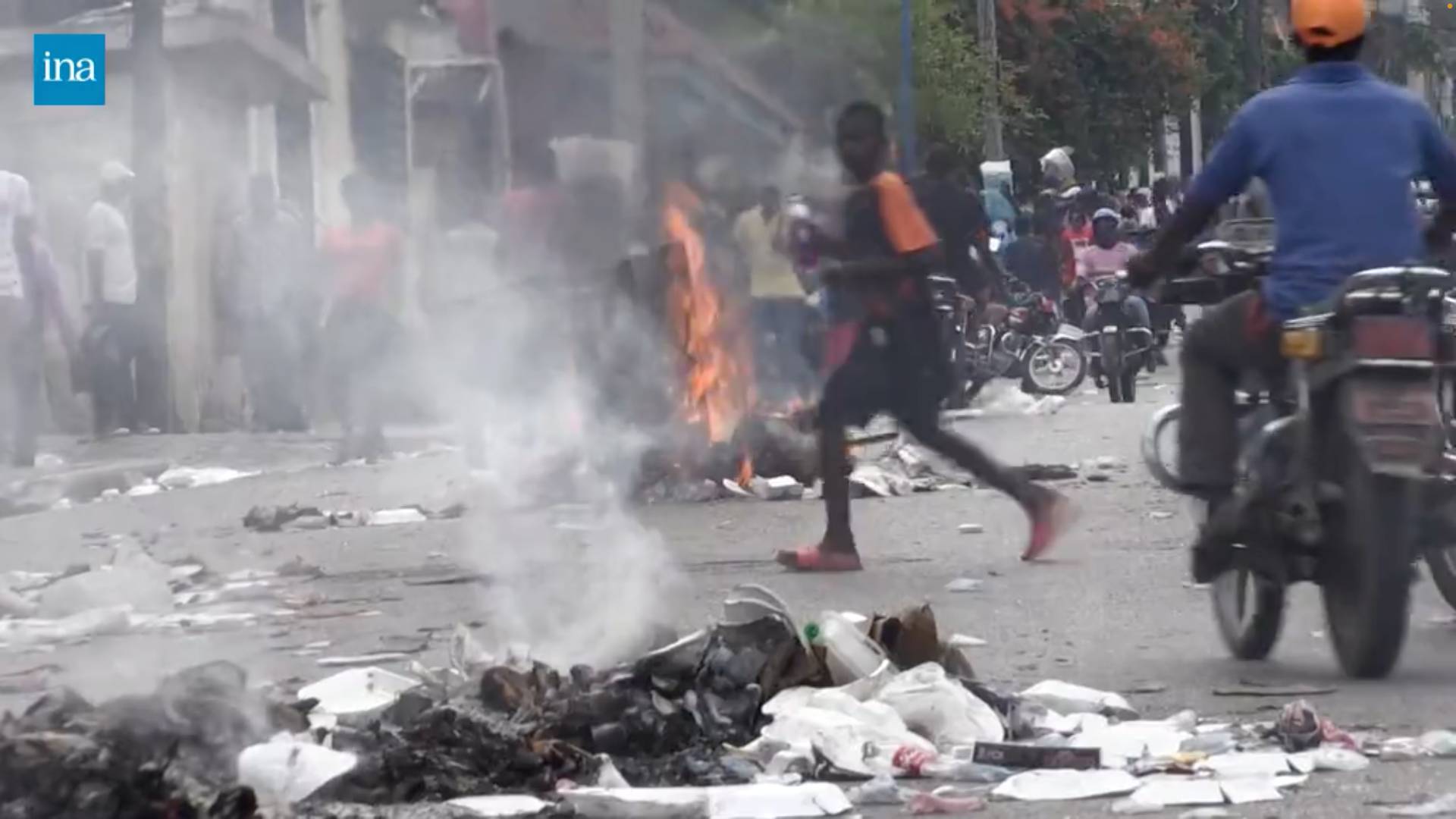
Haitians have a proverb for documents like constitutions: Konstitisyon se papie, bayonèt se fè. The constitution is paper. Bayonets are a weapon. It is earned wisdom, paid for across twenty-three constitutions since 1801 — not counting amendments — across two centuries of charts and promulgations, each greeted with hope and each outlasted by the men with guns. Nobody in Haiti needs to be taught that parchment cannot stop a bullet. The proverb is cited not out of cynicism but out of experience — and this chapter does not dispute it.
Because the proverb is true about politics. Steel does decide who rules. Coups, occupations, and armed gangs have rewritten or suspended every constitutional order the country has produced, and a legal text has never once held a barricade. What the proverb gets wrong is its silence on everything that is not politics. Bayonets have never decided whether the children of a communal section learn to read. They have never decided whether a field is planted with science or with guesswork, whether a schoolhouse stands inviolable, whether a teacher is paid. Those things are decided by what gets built and who gets trained — the slow work that paper can direct and steel cannot confiscate.
Herein lies the turn: paper’s answer to bayonets is not another proclamation. It is a population with skills. An armed force can seize a ministry, a treasury, a television station. It cannot seize a farmer’s knowledge of her own soil, a mason’s hands, a nurse’s training. Section F of the 1987 Constitution — quoted in full below — commits the Haitian State to building precisely that unconfiscatable population. The chapters that follow are about the long work of making the paper true where the bayonets cannot reach it.
What follows is the constitutional text itself, article by article, and a reading of each commitment — of what it promises, and of what it would take to make it real.
The Framework Already Exists
Every discussion of Haiti’s future begins with a list of what the country lacks. This chapter begins with what the country already has — on paper, at the highest law of the land, since its ratification in 1987.
Section F of the Constitution of the Republic of Haiti, titled "Education and Teaching," commits the State to nearly everything the development conversation says Haiti needs: free schooling for all, mass education as the first responsibility of government, compulsory primary schooling with materials provided free of charge, agricultural, vocational, cooperative and technical training in every communal section, merit-based access to higher education, provision for the disabled and the gifted, fair salaries for teachers, freedom of education under state oversight, and the inviolability of the schoolhouse itself.
The articles below are quoted verbatim, because the argument rests on their exact words. The claim they support is simple and consequential: Haiti does not lack a legal framework for education and practical training. It lacks execution. What follows is a reading of each commitment — and of what it would take to make it real.
Article 32 — The State Guarantees Education
ARTICLE 32 — "The State guarantees the right to education. It sees to the physical, intellectual, moral, professional, social and civic training of the population."
1987 Constitution of the Republic of Haiti, TITLE III, CHAPTER II, SECTION F (Education and Teaching). English text per the translation of the Embassy of Haiti in Washington, DC, as published by the Political Database of the Americas, Georgetown University.
The article does not limit its promise to literacy. It binds the State to the training of the whole person — physical, intellectual, moral, professional, social and civic. That breadth matters for any development strategy: a population trained only for tests is not the population this article promises. The professional and civic dimensions point toward exactly the practical skills — growing, making, preserving, building — that a self-sustaining Haiti requires. The right is universal; no socioeconomic status, region, or age is excluded.
Article 32-1 — Free Schooling and Trained Teachers
ARTICLE 32-1 — "Education is the responsibility of the State and its territorial divisions. They must make schooling available to all, free of charge, and ensure that public and private sector teachers are properly trained."
1987 Constitution of the Republic of Haiti, TITLE III, CHAPTER II, SECTION F (Education and Teaching). English text per the translation of the Embassy of Haiti in Washington, DC, as published by the Political Database of the Americas, Georgetown University.
Two commitments in one article. First, education is not a central-government monopoly: the State and its territorial divisions share the duty — the departments, the communes, the communal sections. This is the constitutional foundation for locally owned development, decades before "community-led" became the language of the international field. Second, the State owes trained teachers in both the public and the private sector — recognition that most Haitian schooling has always passed through non-state hands, and that the quality of instruction, not merely its availability, is the State’s business.
Article 32-2 — Mass Education as the First Responsibility
ARTICLE 32-2 — "The first responsibility of the State and its territorial divisions is education of the masses, which is the only way the country can be developed. The State shall encourage and facilitate private enterprise in this field."
1987 Constitution of the Republic of Haiti, TITLE III, CHAPTER II, SECTION F (Education and Teaching). English text per the translation of the Embassy of Haiti in Washington, DC, as published by the Political Database of the Americas, Georgetown University.
The drafting Assembly ranked mass education first and attached to it a striking justification: "which is the only way the country can be developed." No qualifier, no alternative route. Education of the masses is named as the precondition of national development itself — a constitutional sentence that answers, in advance, every proposal to build Haiti’s economy on anything other than the capabilities of Haitians. The same article opens the door to private enterprise, not as a substitute for the State but under its encouragement and facilitation.
Article 32-3 — Compulsory Primary Schooling
ARTICLE 32-3 — "Primary schooling is compulsory under penalties to be prescribed by law. Classroom facilities and teaching materials shall be provided by the State to elementary school students free of charge."
1987 Constitution of the Republic of Haiti, TITLE III, CHAPTER II, SECTION F (Education and Teaching). English text per the translation of the Embassy of Haiti in Washington, DC, as published by the Political Database of the Americas, Georgetown University.
The obligation runs in both directions. The family must send the child; the State must provide the classroom and the materials free of charge. The compulsion is enforceable "under penalties to be prescribed by law" — but the State’s own duty is unconditional. A country that enforced the parents’ half of this article while neglecting the State’s half would betray the provision’s design. The two clauses stand or fall together.
Article 32-4 — Agricultural, Vocational, Cooperative and Technical Training
ARTICLE 32-4 — "Agricultural, vocational, cooperative and technical training is a fundamental responsibility of the State and its communes."
1987 Constitution of the Republic of Haiti, TITLE III, CHAPTER II, SECTION F (Education and Teaching). English text per the translation of the Embassy of Haiti in Washington, DC, as published by the Political Database of the Americas, Georgetown University.
Of all of Section F, this is the article a development network reads first. Agricultural training — for a nation whose wealth, as the same Constitution elsewhere declares, rests in agriculture (Article 247 names it "the main source of the Nation’s wealth"). Vocational and technical training — for the workforce every functioning economy requires. Cooperative training — the kombit tradition written into fundamental law. And it is assigned not to a distant ministry but to the State and its communes: the institutions closest to the land. Article 32-4 is the constitutional warrant for placing practical skills at the center of any genuine development plan.
Article 32-5 — Early Childhood and Non-Formal Education
ARTICLE 32-5 — "Preschool and maternal training, as well as nonformal education are encouraged."
1987 Constitution of the Republic of Haiti, TITLE III, CHAPTER II, SECTION F (Education and Teaching). English text per the translation of the Embassy of Haiti in Washington, DC, as published by the Political Database of the Americas, Georgetown University.
The State is to encourage preschool and maternal training — recognizing that a child’s education begins before the classroom, at the mother’s side — and non-formal education: the apprenticeships, community programs, and adult learning that reach those the formal system never absorbed. For a country where the school system has never covered the whole population, the constitutional encouragement of non-formal pathways is not a footnote. It is an acknowledgment that learning happens everywhere Haitians gather to work.
Article 32-6 — Higher Education by Merit
ARTICLE 32-6 — "Higher education shall be open to all, on an equal bases, according to merit only."
1987 Constitution of the Republic of Haiti, TITLE III, CHAPTER II, SECTION F (Education and Teaching). English text per the translation of the Embassy of Haiti in Washington, DC, as published by the Political Database of the Americas, Georgetown University.
Access to higher learning is to rest on "merit only" — not wealth, connection, or geography. The article protects the ladder by which talent rises from any communal section to the professions. A nation that loses its capable young to circumstance loses its future; this clause is the Constitution’s answer.
Article 32-7 — Every Territorial Division, Without Prejudice to Priority
ARTICLE 32-7 — "The State shall see to it that each territorial division, communal Section, commune or Department shall have the essential educational establishments adapted to the needs of their development, without however prejudicing the priorities assigned to agricultural, vocational, cooperative and technical training, which must be widely disseminated."
1987 Constitution of the Republic of Haiti, TITLE III, CHAPTER II, SECTION F (Education and Teaching). English text per the translation of the Embassy of Haiti in Washington, DC, as published by the Political Database of the Americas, Georgetown University.
Local adaptation, with a protected priority. Every communal section, commune, and department is owed establishments suited to its own development — and the Constitution takes care, in the same breath, that this local flexibility never dilute the agricultural, vocational, cooperative, and technical core, "which must be widely disseminated." The drafters understood the temptation: to build fine urban schools while the countryside waits. They forbade it in advance.
Article 32-8 — The Handicapped and the Gifted
ARTICLE 32-8 — "The State guarantees that the handicapped and the gifted shall have the means to ensure their autonomy, education and independence."
1987 Constitution of the Republic of Haiti, TITLE III, CHAPTER II, SECTION F (Education and Teaching). English text per the translation of the Embassy of Haiti in Washington, DC, as published by the Political Database of the Americas, Georgetown University.
The provision embraces both ends of the spectrum — those who need support and those who need challenge — and names the goal for each: autonomy, education, independence. An education system is measured by what it does for the learner hardest to reach and the learner hardest to hold back. This article commits Haiti to measuring well on both counts.
Article 32-9 — The Literacy Campaign
ARTICLE 32-9 — "The State and its territorial divisions have the duty to make all necessary provisions to intensify the literacy campaign for the masses. They encourage all private initiatives to that end."
1987 Constitution of the Republic of Haiti, TITLE III, CHAPTER II, SECTION F (Education and Teaching). English text per the translation of the Embassy of Haiti in Washington, DC, as published by the Political Database of the Americas, Georgetown University.
The duty is to intensify — an ongoing campaign, not a one-time gesture — and once again private initiatives are invited in. Literacy of the masses appears twice in Section F: as the first responsibility in Article 32-2 and as a standing campaign here. The drafters returned to it because everything else in the section depends on it.
Article 32-10 — A Fair Salary for Teachers
ARTICLE 32-10 — "Teachers are entitled to a fair salary."
1987 Constitution of the Republic of Haiti, TITLE III, CHAPTER II, SECTION F (Education and Teaching). English text per the translation of the Embassy of Haiti in Washington, DC, as published by the Political Database of the Americas, Georgetown University.
Five words, and among the most consequential in the section. No system rises above the condition of its teachers, and the Constitution prices that condition into fundamental law: a fair salary, as an entitlement — not a budget line to be honored when convenient. Where teachers are unpaid or underpaid, the constitutional promise of quality education is already broken, whatever the enrollment figures say.
Article 33 — Freedom of Education Under State Control
ARTICLE 33 — "There shall be freedom of education at all levels. This freedom shall be exercised under the control of the State."
1987 Constitution of the Republic of Haiti, TITLE III, CHAPTER II, SECTION F (Education and Teaching). English text per the translation of the Embassy of Haiti in Washington, DC, as published by the Political Database of the Americas, Georgetown University.
Liberty and oversight, joined. Institutions may teach freely at every level; the State ensures that freedom is not exercised into chaos or fraud. The design respects the plural reality of Haitian education — public, private, confessional, community — while keeping the State answerable for standards.
Article 34 — The Inviolable Schoolhouse
ARTICLE 34 — "Except where perpetrators of crimes are caught in the act, the premises of educational establishments are inviolable. No police forces may enter them except with the permission of the supervisors of those establishments."
1987 Constitution of the Republic of Haiti, TITLE III, CHAPTER II, SECTION F (Education and Teaching). English text per the translation of the Embassy of Haiti in Washington, DC, as published by the Political Database of the Americas, Georgetown University.
The schoolhouse is placed beyond the ordinary reach of the State’s armed hand. Police enter only with the permission of the establishment’s own supervisors — the educators, not the enforcers, hold the keys. In a country whose schools have too often been stages for political violence, this article reads as both a safeguard and a wound remembered. Its premise is simple: learning requires a space the guns cannot enter.
What the Section Adds Up To
Read together, the thirteen provisions form a coherent architecture: a universal right (32), delivered locally and free of charge (32-1), with mass education ranked first (32-2) and the family’s compulsion answered by the State’s provision (32-3); built on practical skills — agricultural, vocational, cooperative, technical (32-4) — from childhood (32-5) through merit-based higher learning (32-6), in every territorial division without prejudice to the practical priority (32-7), reaching the handicapped and the gifted alike (32-8), carried by a standing literacy campaign (32-9), sustained by fairly paid teachers (32-10), free in form and controlled in quality (33), in schoolhouses the police cannot enter uninvited (34).
This is not a foreign template. It is Haiti’s own law, drafted by Haitians, ratified by referendum in 1987, and it commits the Haitian State to precisely the capabilities on which any self-sustaining future depends. The proverb is right: the constitution is paper, and bayonets are a weapon. But the proverb does not know everything: steel rules capitals, and skills rule futures. The gap between Section F’s promise and the daily reality of Haitian schooling is the measure of what four decades of crisis have cost — and the clearest statement of the work that remains.
Author’s Note — the Constituent Assembly
The 1987 Constitution was drafted by a Constituent Assembly of 61 members, presided over by Émile Jonassaint. The commitments in Section F are part of that Assembly's work, and the Haitian people ratified them by referendum: 1,261,334 ballots were cast of approximately 2.8 million eligible voters, a 45.4 percent participation rate. That vote is part of this essay's ground: the promises in Section F were made by Haitians to Haitians, in their own constitution.
Sources
Constitution of the Republic of Haiti, 1987, TITLE III, CHAPTER II, SECTION F (Education and Teaching), Articles 32–34. All quoted article text verbatim from the English translation published by the Embassy of Haiti in Washington, DC, via the Political Database of the Americas, Georgetown University (pdba.georgetown.edu/Constitutions/Haiti/haiti1987.html). Adopted by the Constituent National Assembly, Port-au-Prince, March 10, 1987; ratified by referendum.
Corroborating texts consulted: WIPO Lex (Constitution of the Republic of Haiti, 1987); Wikisource, "Constitution of Haïti (1987)".
Related provisions referenced: Article 247 (agriculture as the main source of the Nation’s wealth); Article 64 (State obligation to establish structures for social, economic, civic and cultural training of each Communal Section’s population); Article 22 (right to education among the rights the State recognizes).
Referendum turnout (for the Assembly discussion): 1,261,334 ballots cast of approximately 2.8 million eligible voters (45.4 percent) — per the turnout figure already held in the source register.